
Home Blog Page 2

How the U.S. Grand Prix in Austin Supercharges Texas Transportation Services

0
Formula 1 U.S. Grand Prix at COTA boosting Texas transportation industry

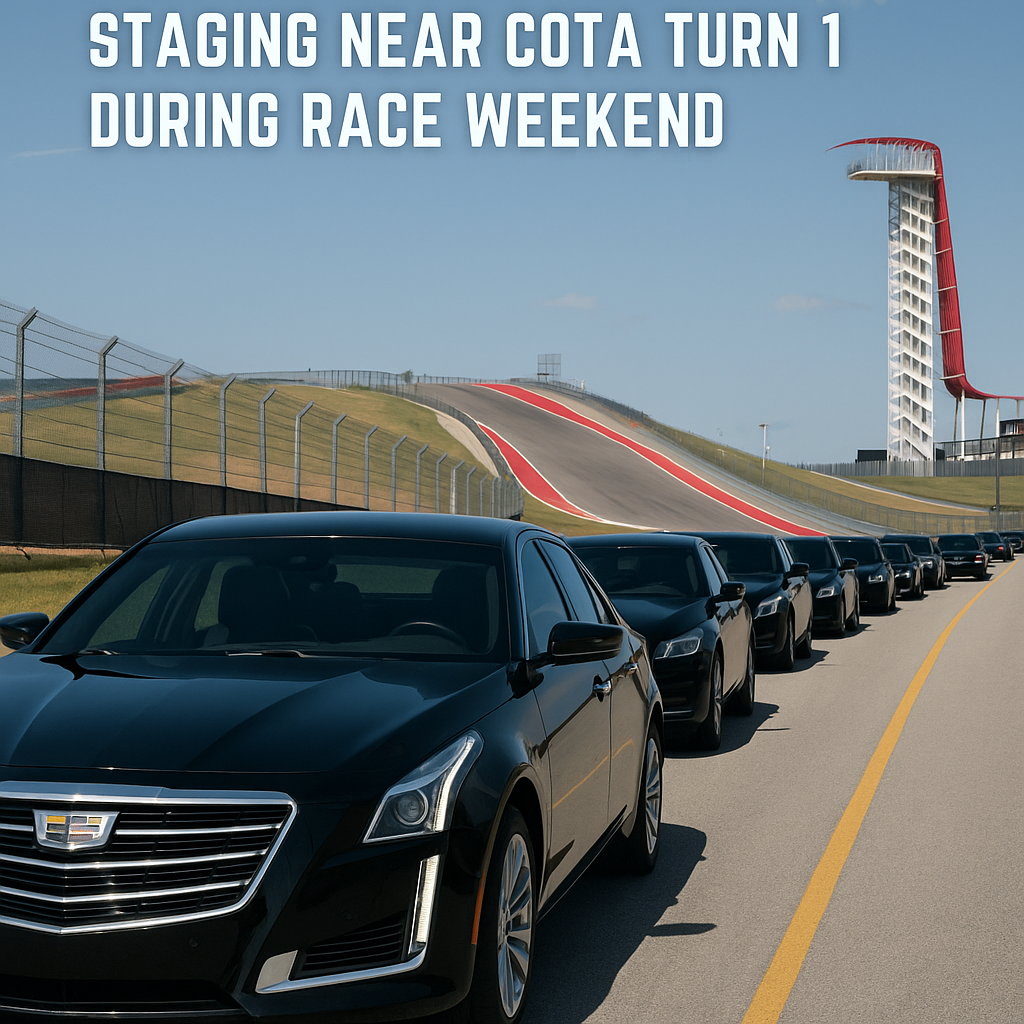
Black cars stagging near COTA Turn 1 during US Grand Prix Austin 2025.How the U.S. Grand Prix in Austin Supercharges Texas Transportation Services

Focus Key Phrase: U.S. Grand Prix Austin transportation impact

Highlights (TL;DR)

  • The U.S. Grand Prix in Austin draws 400k+ visitors, creating a statewide surge in transportation demand.
  • Airports, hotels, and roads overflow; airport transfers, limos, shuttles, and charters hit peak demand across Texas.
  • Houston, Dallas, San Antonio benefit from lodging overflow and long-distance trips to Circuit of the Americas (COTA).
  • Transportation firms win by pre-positioning fleets, premium packaging, and event-focused SEO.
  • Early planning and partnerships turn race week into the year’s largest revenue spike.

Formula 1 U.S. Grand Prix at Circuit of the Americas boosting Texas transportation industry
Formula 1 U.S. Grand Prix at COTA drives statewide transportation demand.

Introduction: The U.S. Grand Prix in Austin, Texas

The Formula 1 United States Grand Prix at the Circuit of the Americas (COTA) near Austin is far more than a race—it’s an economic and logistical phenomenon. Since its 2012 debut, Austin’s Grand Prix has ranked among the most attended F1 weekends worldwide, with three-day totals surpassing 400,000 attendees in recent editions. Each October, fans, sponsors, VIPs, and media descend on Central Texas, triggering a statewide surge in chauffeured transportation, airport transfers, sprinter shuttles, motorcoaches, and ride-hail demand.

For operators across Texas, race week is a stress test and a growth engine: if you plan properly, it’s the highest-earning week of the year. This article explains the demand patterns, shows how Houston, Dallas, and San Antonio become crucial feeder markets, and offers practical steps to maximize revenue while maintaining on-time, VIP-grade service.

The Circuit of the Americas: Austin’s Global Stage

COTA is a 3.426-mile (5.513 km) FIA-certified track with 20 turns, famous for its uphill Turn 1, sweeping esses, and strong overtaking zones. Beyond racing, the venue morphs into a festival of speed, music, and hospitality—amplifying ground-transport needs for private events, sponsor activations, and after-hours entertainment.

COTA’s location—about 15 miles from downtown Austin—matters. When AUS airport and local lodging hit capacity, travelers route through IAH/HOU (Houston), DFW/DAL (Dallas–Fort Worth), and SAT (San Antonio). That overflow creates multi-city demand for long-distance airport transfers and regular hotel-to-circuit shuttles.

Pro Tip: Build mapped staging points near FM 812 and predefined pickup zones to cut dwell time and improve exit speed after sessions.


The Transportation Ripple Effect Across Texas

Race week produces a statewide chain reaction. Every mode—airport transfers, executive limos, sprinter vans, motorcoaches, rideshare, taxis, and even rental cars—faces a demand spike. Hotels, event venues, and concierge desks lean on vetted, licensed operators to move VIPs, creators, and crews safely and on time.

SectorImpact Summary
Airport TransfersPeak arrivals strain AUS; overflow pushes to IAH/HOU, DFW/DAL, SAT, driving inter-city trips.
Chauffeured Limo/Black CarVIPs, sponsors, execs demand private, punctual, premium experiences with meet-and-greet.
Shuttles & CoachesGroup logistics for teams, media, and hospitality; repeated hotel-to-COTA circuits.
Rideshare & TaxisSurge pricing & constrained availability near sessions and concerts.
Rental CarsInventory tightens across Central Texas; chauffeured alternatives gain share.

How Limo and Shuttle Companies Benefit

1) Surging Corporate & VIP Demand

Sponsors and global brands host activations requiring black-car reliability and NDA-level discretion. Multi-stop itineraries, late-night returns, and last-minute changes reward operators with robust dispatch and communication discipline.

2) Airport Overflow & Long-Distance Transfers

Sold-out flights and hotels push visitors into Houston, Dallas, and San Antonio. Inter-city transfers (165–200 miles) become routine, especially for VIPs and media crews that prefer door-to-door service over rental cars.

3) Premium Experience Upsells

F1 is luxury. Bundle meet-and-greet, bottled water, device chargers, Wi-Fi, and priority routing to justify higher ADRs (average daily rates). Offer weekend packages covering arrivals, practice/qualifying, race day, and departure.

Pro Tip: Publish transparent, fixed-price F1 packages. Predictability beats haggling during peak hours and helps with driver scheduling.

Economic Impact & Authoritative Sources

Austin’s Grand Prix is a repeatable tourism engine, with hospitality, food, and ground transportation among top spend categories. For schedules and official event details, see the official Formula 1 U.S. Grand Prix page and the Circuit of the Americas event hub. Local business insight and impact briefs are often summarized by the Austin Chamber.

Houston and Dallas as Feeder Cities

IAH/HOU (Houston) and DFW/DAL (Dallas–Fort Worth) capture international traffic when AUS maxes out. That fuels demand for executive SUVs, sprinters, and coaches running multi-hour trips to Austin and nearby towns (Round Rock, San Marcos, Bastrop).

Smart operators collaborate across metros—e.g., a Houston vendor handles arrivals and hands off to an Austin partner for daily circuits—protecting quality and uptime.

Pro Tip: Build city-pair landing pages: “Houston to Austin Grand Prix Transfers” and “DFW to COTA VIP Sprinter” to capture high-intent queries.
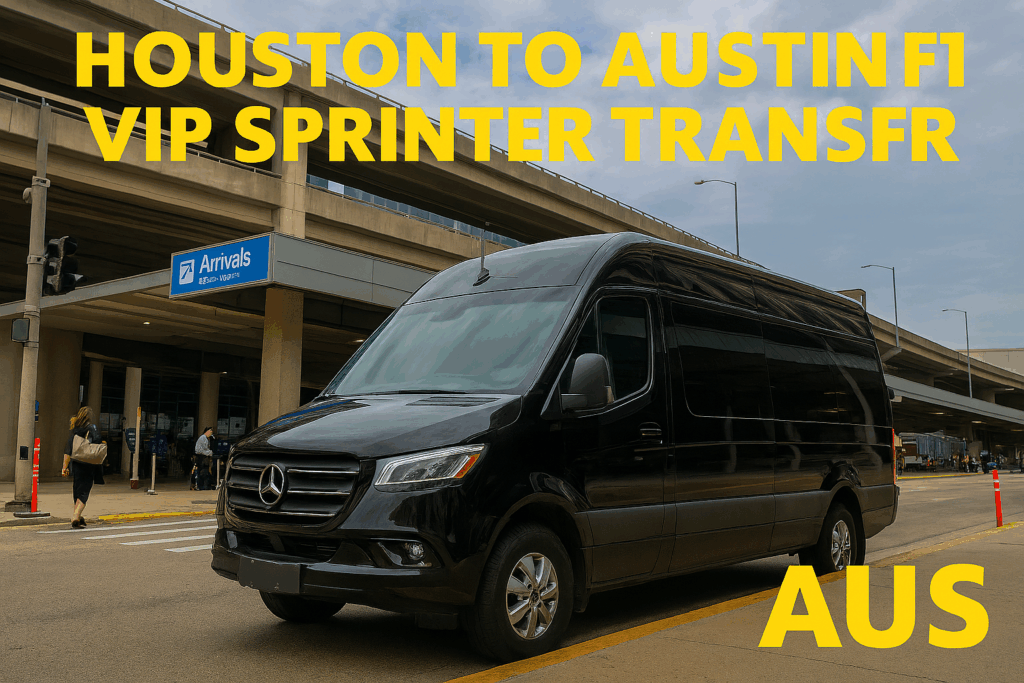
Houston to Austin F1 VIP Sprinter transfer

Hotel Overflow = Transportation Opportunity

Race-week ADRs in Austin spike, pushing visitors to Round Rock, San Marcos, Bastrop, and even Houston. That radius expansion creates daily demand for commuter shuttles and private chauffeur packages. Make it easy with simple booking flows, clear pickup windows, and SMS confirmations.

Create a dedicated page (e.g., “Round Rock to COTA Shuttle”) and add LocalBusiness + Event schema to boost AI search visibility.

Search & AI Visibility During Race Week

  • Landing pages: “Austin F1 shuttle,” “U.S. Grand Prix limo service,” “Formula 1 transfers from Houston.”
  • Google Business Profile: Event posts, COTA-week hours, and service areas.
  • Schema: Add FAQ, LocalBusiness, and Event markup (see JSON-LD below).
  • Visuals: Fleet photos with keyword-rich alt text (e.g., “Austin F1 VIP sprinter transfer”).
  • AI-friendly formatting: Short paragraphs, labeled sections, clear questions and answers.

Operational Challenges to Plan For

Expect traffic congestion, restricted access, and spotty cell networks near COTA. Build extra buffer time into itineraries. Use geofenced pickup points and two-way messaging. Price for overtime and fuel volatility.

Staging & Timing Playbook

  • Stage near FM 812 where compliant and permitted.
  • Pre-assign Plan B/C routes for post-race exits.
  • Consolidate small groups into sprinters for fewer curbside events.
  • Keep a rapid-response spare vehicle for VIP schedule changes.

Beyond Austin: Statewide Impact on Mobility

Houston: High international arrivals, strong demand for SUVs and sprinters; concierge meet-and-greet at IAH is a differentiator.
Dallas–Fort Worth: Long-distance charters for fan groups and media; frequent DFW↔COTA runs.
San Antonio: Lodging overflow and day-trip shuttles to COTA with early departures and late returns.
Galveston: Some visitors extend stays for cruises; port-area limo firms capture incremental bookings.

Action Plan for Transportation Companies

  1. Prepare Fleets Early: Full inspections 30 days out; stock water, chargers, signage, Wi-Fi hotspots.
  2. Package & Price: Weekend bundles (arrivals + practice/qualifying + race + departure) with fixed pricing.
  3. Train & Brief: Chauffeurs rehearse routes, staging areas, and client etiquette.
  4. Market Smart: SEO pages + PPC for “F1 Austin transfers,” social countdowns, hotel/concierge partnerships.
  5. Optimize for AI-Search: Clear headings, FAQs, schema, and conversational phrasing.

Conclusion: Driving Texas Forward

The U.S. Grand Prix in Austin is a catalyst for Texas mobility. With disciplined planning, premium service design, and event-focused marketing, transportation companies convert a complex weekend into a brand-building, high-profit showcase. As F1 expands its U.S. presence, Texas remains a cornerstone—and its transportation providers are the engines that keep it all moving.

FAQs

1- How does the U.S. Grand Prix in Austin impact local transportation?

The race attracts hundreds of thousands of visitors, overwhelming local capacity and boosting demand for airport transfers, limos, shuttles, and ride-hail across the region. Many operators report their highest-earning week during the event.

2- Which Texas cities benefit most from the Grand Prix?

Besides Austin, Houston, Dallas–Fort Worth, and San Antonio see major gains from lodging overflow and international arrivals, driving inter-city transfers and multi-day chauffeur packages.

3- How can transportation companies prepare for the Grand Prix?

Plan early: expand fleets, secure standby drivers, create fixed-price weekend bundles, and publish event-specific pages with FAQs and schema. Partner with hotels and event planners, and pre-map staging areas near COTA for faster turnarounds.

4- Did Houston limousine companies get business from the U.S. Grand Prix in Austin in 2025?

Yes — many Houston-based limousine operators saw a strong surge in bookings during the 2025 Formula 1 U.S. Grand Prix in Austin. Demand for VIP transfers, corporate shuttles, and executive transportation rose sharply as fans, sponsors, and business travelers moved between Houston and Austin. The Houston Limousine Association had already prepared its members well in advance, coordinating strategies and logistics through meetings and updates since 2021. For many companies, it turned into a record-breaking revenue weekend and a true showcase of Texas hospitality and professional chauffeur service.

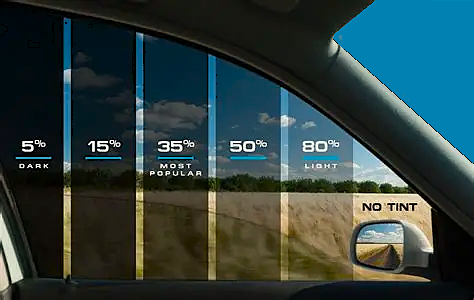
Houston Limousine Window Tint Law 2025

0
houston-limousine-window-tint-law-2025/

What Houston Limousine Operators Must Know About the 2025 Window Tint Law

Article Highlights (TL;DR)

• The Houston Limousine Window Tint Law 2025 updates Texas Visible Light Transmission (VLT) rules for commercial and for-hire vehicles.

• Limousines, town cars, and other fleet vehicles must comply with specific VLT percentages by window type.

• Violations can result in fines, inspection failures, and reputational risks for operators.

• Proactive compliance saves money and safeguards your company’s professional image.

• Tips include vetting tint shops, keeping records, and training drivers on the law.

Introduction

The Houston Limousine Window Tint Law 2025 is one of the most important updates limousine and for-hire vehicle operators must understand this year. For Houston fleet owners and operators, compliance is not optional. A single violation can lead to steep fines, inspection failures, and a loss of credibility with clients. By staying informed and applying the law correctly, operators ensure their vehicles project professionalism while avoiding unnecessary setbacks.

The Core of the Law: Understanding Houston’s VLT Regulations

Specific VLT Percentages for Limousines

Texas law requires certain Visible Light Transmission (VLT) levels, measured as the percentage of light allowed through windows. For commercial and for-hire vehicles operating in Houston, the following apply:

• Front Windshield: Tinting is allowed above the manufacturer’s AS-1 line or the top five inches, whichever is lower, with a minimum VLT of 25%.

• Front Side Windows: Must allow at least 25% VLT.

• Rear Side Windows: No VLT limit for limousines and passenger vehicles if the vehicle has outside rearview mirrors on both sides.

• Rear Window: No VLT limit if outside rearview mirrors are present on both sides.

houston-limousine-window-tint-law-2025

Distinctions for For-Hire Vehicles

While personal vehicles in Texas enjoy broader flexibility, for-hire vehicles such as limousines and town cars often face additional scrutiny. Commercial fleets are inspected more frequently and must maintain documented proof of compliance. Some luxury fleets may qualify for medical or security exemptions, but these require formal permits from the Texas Department of Public Safety (DPS). Operators should never assume exemptions without written authorization.

Enforcement, Penalties, and the Cost of Non-Compliance

Fines and Other Consequences

Failing to comply with the Houston Limousine Window Tint Law 2025 carries real costs:

• Fines: Citations can range from $150 to $275 per violation, depending on severity and repeat offenses.

• Inspection Failures: Annual state inspections can be denied if tint is too dark, leading to downtime and repair costs.

• Reputational Impact: Corporate clients expect luxury fleets to maintain compliance. A failed inspection or roadside ticket damages the trust that operators work hard to build.

Furthermore, law enforcement in Houston actively monitors limousine fleets, especially near high-traffic zones like George Bush Intercontinental Airport (IAH), William P. Hobby Airport (HOU), and major hotel districts. Non-compliance in these areas can also trigger increased regulatory attention.

Pro Tips for Staying Ahead of the Law

• Vet Tint Shops Carefully: Only work with tint installers who understand Texas commercial vehicle tint laws. Always request written certification of VLT levels.

• Keep Compliance Records: Store tint installation receipts, certification stickers, and inspection reports in vehicle files. These may serve as evidence if compliance is ever questioned.

• Train Drivers and Managers: Ensure staff can answer client or officer questions about the law. Awareness reduces operational risks.

• Plan for Inspections: Schedule pre-inspection checks before state inspection deadlines to avoid surprises.

• Review Fleet Regularly: Changes in ownership, accident repairs, or glass replacements can inadvertently put a vehicle out of compliance.

Conclusion

The Houston Limousine Window Tint Law 2025 is more than just a regulation—it is a reflection of professionalism in the chauffeured transportation industry. Compliance helps operators avoid costly penalties, ensures smooth inspections, and reinforces the industry’s reputation in Houston’s competitive market. Staying ahead of these laws is not only a legal obligation but also a cornerstone of dependable, high-end service.

Frequently Asked Questions (FAQ)

Q1: Do limousines have stricter window tint rules than personal vehicles?
A: Yes. While Texas law allows more flexibility for personal cars, limousines and other for-hire vehicles in Houston face stricter enforcement. These vehicles undergo more frequent inspections and are more likely to be checked during roadside stops.

Q2: Can I install darker tint if clients request extra privacy?
A: No. Client preference does not override the Houston Limousine Window Tint Law 2025. Operators must follow the official VLT limits, or they risk fines, failed inspections, and possible removal of the tint.

Q3: What if my limousine fleet had window tint applied before 2025?
A: Pre-existing tint does not exempt you. All limousines and for-hire vehicles must comply with the updated 2025 tint regulations. Older tint jobs are not grandfathered in.

Q4: How can I confirm that my limousine’s tint is legal?
A: Always request a VLT compliance certificate from your tint installer. Keep this documentation in your records and verify the levels during each annual inspection to avoid surprises.

Q5: Are there exemptions for medical, executive, or security reasons?
A: Yes, but exemptions are limited. They require official approval and documentation from the Texas Department of Public Safety (DPS). Operators should never assume exemptions apply without written authorization.

Understanding Chapter 46: A Houston Limo Driver’s Guide to Ground Transportation

1
Understanding Chapter 46:

Quick Summary

– Understand what Chapter 46 is and why it matters
– Learn who needs a license and how to get it
– Discover what happens if you operate without a permit
– Get tips on staying compliant and protecting your business
– Review real examples from Houston’s limousine industry

Transportation Rules

Learn what Chapter 46 means for Houston limo drivers. Stay legal, avoid fines, and understand your rights and responsibilities.

Introduction

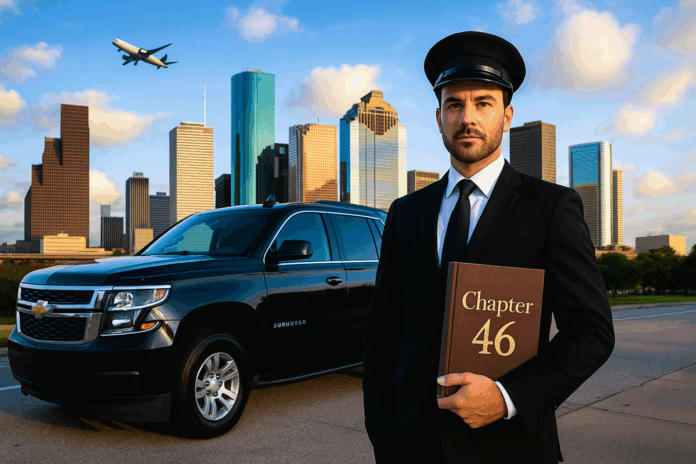
Understanding Chapter 46 is essential for every Houston limousine driver operating in Houston. If you drive a limousine, shuttle, or black car service in Houston, you’ve probably heard of Chapter 46. But what is it really about? Chapter 46 is the part of the City of Houston’s Code of Ordinances that regulates all for-hire transportation services, including limousines, private car services, and shuttle vans. It’s the rule book that tells you what you can and can’t do. This article breaks down Chapter 46 in plain language so every limo driver can understand it, follow it, and stay out of trouble.

What is Chapter 46?

Chapter 46 is a section of Houston’s city law that covers rules for anyone offering paid rides to the public. That includes limousines, airport shuttles, non-emergency medical transportation, and even rideshare services that are not part of a state-recognized TNC like Uber or Lyft. If you pick up passengers and charge money for the ride, you must follow the rules in Chapter 46. This includes having the correct type of license, insurance, and vehicle permits. The goal is to keep riders safe and ensure fair business practices.

Why It Matters to Limo Drivers

Understanding Chapter 46 is essential to run a smooth business operation. Many drivers think Chapter 46 is just more government paperwork, but it’s more than that. If you don’t follow the law, you could face serious fines, vehicle impoundment, or even lose your ability to operate in the city. Chapter 46 protects both the public and drivers by creating standards for safety, insurance coverage, background checks, and service quality. For example, it requires limo drivers to undergo drug testing and maintain clean driving records.

Key Rules Every Driver Should Know

Here are some key rules from Chapter 46 every limousine operator must follow:

– You must have a valid chauffeur license issued by the City of Houston.
– Your vehicle must have a current City of Houston permit displayed at all times.
– You must carry commercial liability insurance.
– You cannot pick up passengers from the airport unless you’re authorized.
– Drivers must follow dress code standards (usually business attire).
– No cash pickups unless pre-arranged by contract or dispatch.

Licensing and Permit Process

To operate legally under Chapter 46, you need to apply for a license and permit. The process includes:

1. Filling out a chauffeur license application.
2. Submitting to a background check and drug screening.
3. Paying licensing and vehicle fees.
4. Completing a safety and compliance orientation (required for new drivers).

Vehicle permits must be renewed each year, and vehicles must pass inspection.

What Happens if You Break the Rules?

If you’re caught operating without a license or permit, the penalties can be serious:

– First-time offense: $200–$500 fine
– Repeat offenses: Vehicle impoundment, license suspension, or criminal charges

Inspectors conduct regular stings and patrols, especially at high-traffic locations like airports and hotels. Don’t take the risk—stay legal.

Pro Tips to Stay Compliant

– Always renew your permits on time. Set a reminder on your phone or calendar.
– Keep copies of your documents in your glove box and on your phone.
– Attend Houston Limousine Association meetings to stay updated on city changes.
– Don’t rely on verbal contracts—use dispatch apps or formal trip logs.
– Never assume you’re exempt because you have a state license—City of Houston has its own rules.

“Understanding Chapter 46 is essential to run a smooth limousine operation”

Conclusion

Chapter 46 may seem like a lot to understand, but it’s there to protect both you and your passengers. By following its rules, you ensure your business operates legally and safely. Stay informed, keep your paperwork up-to-date, and reach out to local organizations like the Houston Limousine Association for support. The better we understand the law, the stronger and more professional our industry becomes.

Illegal Airport Soliciting

0
Unlawful Solicitation at IAH Airport

Unlawful Solicitation of Ground Transportation Services at IAH Airport

Quick Summary

  • Understand what unlawful solicitation means at Houston’s IAH Airport.
  • Discover how it disrupts legitimate transportation services.
  • Learn actionable enforcement strategies airports can adopt.
  • Review real-world examples and how to report incidents.
  • Access tools, tips, and authoritative resources.

Introduction

Illegal airport soliciting at Houston’s George Bush Intercontinental Airport (IAH) is becoming an urgent issue at one of the busiest travel hubs in the United States. Every year, millions of passengers depend on IAH’s infrastructure for safe and efficient transportation, yet this system is increasingly threatened by unlicensed ground transportation providers. These solicitors often approach travelers without authorization, offering rides outside regulatory bounds. The result is confusion, unsafe interactions, and financial losses for both passengers and legitimate, licensed operators. This guide explores how IAH and its partners can address the problem through practical enforcement, public education, and technology-driven solutions.

What is Unlawful Solicitation of Ground Transportation at Airports?

Unlawful solicitation occurs when individuals or entities offer transportation services at an airport without proper licensing, permits, or scheduling protocols. At IAH, this typically happens at arrival terminals, baggage claim areas, or designated pick-up zones where unlicensed drivers approach travelers to solicit rides directly. Unlike authorized transportation providers who undergo background checks, pay access fees, and follow regulations, these unauthorized operators work outside the law. They endanger passengers, undercut professional businesses, and erode trust in airport security protocols.

Why It’s Important Today

In today’s climate, where safety, professionalism, and trust are key to traveler satisfaction, unlawful solicitation undermines public confidence. Reports at IAH Airport have shown a steady increase in complaints from passengers approached by aggressive or suspicious individuals offering rides. This behavior disrupts passenger flow, delays scheduled services, and puts travelers at risk of being scammed or overcharged. More importantly, the airport itself loses valuable revenue generated from fees and permits issued to authorized providers.

How IAH Airport Handles Illegal Solicitors?

Airports like IAH must adopt multi-tiered strategies to reduce unlawful solicitation. First and foremost, law enforcement and airport security personnel should be visibly present in arrival areas and pick-up zones. Increased patrols and undercover operations can deter illegal solicitors. Public awareness campaigns—via digital screens, announcements, and signage—can educate travelers on how to identify licensed services. Technology also plays a critical role. Tools such as digital ride-verification apps or QR-code scanning systems can be implemented to verify authorized drivers.

Pro Tip: Consider integrating your transportation business with the airport’s scheduling system or app to improve transparency and trust with travelers.

Common Challenges Faced by Airports

Enforcing ground transportation laws at large international airports is complex. One of the biggest challenges at IAH is staffing—airport police and transportation officers are stretched thin and can’t be everywhere at once. The airport layout presents additional difficulties. IAH’s terminals are spread out, making it time-consuming for ground inspectors to move between them, which creates exploitable gaps for illegal solicitors. Moreover, the proximity of the TNC (rideshare) pickup parking to the designated limousine parking area allows some unscrupulous limo drivers to solicit TNC clients directly. Without physical barriers, clear separation, or strategic relocation of these parking zones, enforcement becomes even harder. The current design of the limousine parking areas also fails to restrict illegal activity effectively, as solicitors can park in regular public lots and enter the terminal on foot to approach passengers. Repeat offenders often find loopholes or return after being removed, and the blurred line between legitimate ride-share drivers and unauthorized operators further complicates enforcement. Without robust verification mechanisms and smarter infrastructure planning, it becomes difficult for both travelers and law enforcement teams to ensure safe and compliant ground transportation operations.

Comparative Enforcement: How Other Airports Handle Illegal Solicitation

Insert Photo

Case Study: How LAX Handles Illegal Solicitors

In a proactive move to protect passenger safety, Los Angeles International Airport (LAX) conducted a law enforcement operation targeting illegal for-hire operators, also known as ‘bandit taxis.’ The Airport Police Ground Transportation Enforcement Unit (GTEU) deployed over 15 officers—both uniformed and undercover—to crack down on unlicensed drivers soliciting passengers illegally at the terminal.

As a result:

  • Four drivers were cited, and their vehicles were impounded.
  • Offenses included driving with a suspended license, operating a rented unmarked van, and soliciting inside terminals.
  • Each driver faced potential fines over $1,000 and court appearances to recover their vehicles.

The operation aimed to reduce illegal transportation activity ahead of the holiday travel season and to ensure that only licensed, insured, and regulated providers serve the airport. LAX officials warn travelers never to accept rides from solicitors and to use only designated ground transportation zones.

Ongoing efforts:

  • In 2005 alone, LAX Airport Police issued 116 citations and impounded 102 vehicles related to illegal solicitation.
  • Airport Police regularly conduct similar sting operations to maintain compliance and public safety.

LAX’s aggressive enforcement model demonstrates the importance of routine monitoringpublic education, and zero-tolerance enforcement in curbing unauthorized ground transportation.

Case Study: Miami-Dade Cracks Down on Illegal Airport Solicitation

Miami-Dade County has launched an aggressive campaign to stop unlicensed rideshare solicitors at Miami International Airport (MIA), citing serious risks to passenger safety and consumer protection.

Key Enforcement Actions:

Since 2022, authorities have issued:

  • 150 citations to drivers for illegally soliciting rides at MIA.
  • 650+ citations to unlicensed for-hire providers.
  • 90+ vehicles impounded through 20+ undercover operations.
  • In just one recent operation:
  • 3 unlicensed solicitors were cited.
  • 3 vehicles were impounded.
  • 3 trespass warnings were issued.

Why It Matters:

According to Mr. Ivan Cotayo, supervisor with the Miami-Dade Passenger Transportation Regulatory Division:

“We don’t know if that driver has a criminal background. We don’t know if they have a driver’s license… In a lot of our undercover operations, we have arrested people because they’re operating without a driver’s license, no insurance, and also they don’t have the commercial insurance that would protect you as a consumer.”

Unlike licensed rideshare companies such as Uber, Lyft, and regulated limo/taxi providers, unlicensed solicitors offer no insuranceno accountability, and no passenger protections.

Financial Perspective for Drivers:

Drivers caught without proper licensing face:

  • $1,000 in citations per incident
  • Vehicle impoundment
  • Trespass warnings at MIA

Meanwhile, a legal path to compliance only costs:

  • $350 for a limousine license
  • $350 per vehicle

As Cotayo explains:

“With that $1,000, you could have paid for all the licenses and still have some cash available.”

Case Study: NYC Cracks Down on Illegal Solicitation at JFK and LaGuardia Airports

New York City’s Taxi and Limousine Commission (TLC) has ramped up enforcement against illegal street hails and unlicensed solicitors operating at its major airports—JFK and LaGuardia—to protect passengers and ensure fair competition among licensed transportation providers.

Undercover Operations at NYC Airports:

  • The TLC uses undercover officers who pose as passengers to detect illegal ride solicitation.
  • These sting operations are conducted in areas where street hails are prohibited unless a driver is licensed and authorized.
  • Focus areas include airport terminals and curbside pickup zones, where unauthorized solicitations are most common.

Financial & Enforcement Results (Since January 2020):

  • 5,500+ summonses issued for unlawful pick-ups and illegal solicitations citywide.
  • Over 50% of those violations occurred at JFK and LaGuardia Airports.
  • NYC collected approximately $1 million in paid fines, out of $8 million in total penalties issued.
  • $700,000 in fines were collected specifically from violations at JFK and LaGuardia alone.

Penalties for Drivers:

  • Up to $1,500 per violation for illegal airport pickups.
  • Additional penalties may include:
  • License suspension
  • Vehicle registration suspension
  • Court appearances to resolve violations

TLC’s Public Safety Message:

According to TLC officials:

“Safety is our top priority. Our undercover enforcement operations target drivers who are not licensed by the TLC or operating outside the rules.”

These enforcement actions aim to:

  • Reduce the number of unlicensed, uninsured, and untraceable drivers.
  • Protect travelers—especially tourists—who may be unaware of NYC’s transportation rules.
  • Preserve the integrity of NYC’s for-hire licensing system and airport operations.

This case demonstrates the importance of consistent, targeted enforcement, along with strong financial penalties, to deter unauthorized ground transportation activity at busy international airports.

Pro Tip: If your business is affected, maintain incident logs and report them to both airport authorities and local enforcement to build cases against repeat violators.

Houston Limousine Association’s Stand Against Illegal Soliciting

The Houston Limousine Association (HLA) is a staunch advocate for fair and legal ground transportation practices, and we are committed to combating illegal soliciting. The HLA proudly stands against all forms of illegal soliciting, whether perpetrated by unlicensed or licensed drivers. This policy is fundamental to our mission of ensuring a safe, professional, and transparent transportation landscape for both residents and visitors in the Houston area. We believe that by maintaining these high standards, we can protect consumers from unscrupulous practices, ensure fair competition among all service providers, and uphold the integrity of the limousine and chauffeured car industry.

Houston Limousine Association's Stand Against Illegal Soliciting

Tools, Tips & Resources

Airports and transportation companies can access a variety of tools to combat this issue. Surveillance cameras combined with license plate recognition (LPR) software help identify repeat offenders. QR code systems that verify licensed drivers provide a simple way for travelers to validate their rides. Training staff and drivers on how to spot solicitation tactics can strengthen defenses. Additionally, providing printed materials or quick-tip cards to passengers raises awareness.

Frequently Asked Questions (FAQs)

Q: What qualifies as unlawful solicitation at IAH Airport?
It refers to unlicensed individuals offering rides to travelers without prior bookings or proper permits.

Q: How can I report unlawful solicitation?
Contact airport police or use the IAH traveler helpdesk at the terminal to file a report.

Q: Why should travelers avoid unlicensed operators?
These drivers may not carry insurance, could overcharge, or lack background checks, posing safety risks.

Q: Is it legal to offer a ride at the airport without a license?
Offering paid rides at the airport without a proper license is illegal, and can result in fines, vehicle impoundment, or criminal charges.

Q: What happens if you get caught soliciting at IAH?
If you’re caught soliciting rides at George Bush Intercontinental Airport (IAH) without proper authorization, you could face fines starting at $100 for a first offense, escalating to $500 and a one-year suspension for repeated violations.

Conclusion

Unlawful solicitation is a growing issue at IAH Airport and across major U.S. travel hubs. It poses legal, financial, and safety challenges that cannot be ignored. Through better enforcement, public education, and technology, airports and transportation providers can work together to preserve safe, efficient, and professional ground transport systems. As a traveler, always choose licensed providers. As an operator, advocate for strict compliance and report violations to ensure a level playing field.

“Last updated: August 2025”

Houston Limousine Association

0
Join your Houston-Limousine-Association in 2026


Houston Limousine Association: Why Joining in 2026 Is Crucial for Your Business Success

Article Highlights

  • Houston Limousine Association gives operators a unified voice, practical resources, and real leverage.
  • Advocacy, networking, cost savings, and business development deliver measurable ROI.
  • Transparent leadership and operator‑led governance ensure equal representation.
  • Founding members set standards, shape policy, and elevate Houston’s limo reputation.

Join-The-Houston-Limousine-Association-2026
Members of the Houston Limousine Association share referrals, advocacy plans, and growth strategies.

A United Front: Why Houston’s Limousine Industry Must Come Together Now

The Houston Limousine Association is being revived for a simple reason: the market has changed, and operating alone no longer works. Independent owner‑operators, mid‑sized providers, and established fleets all face the same realities—intense price competition, complicated regulations, and rising costs—while corporate clients still demand reliability, safety, and professionalism. Therefore, rebuilding a modern, operator‑led association is not a luxury; it is an urgent business decision.

The Current Landscape (Why Now?)

  • Aggressive competition from rideshare TNCs targeting premium clients.
  • Rising insurance, labor, and fuel costs that compress margins.
  • Confusing or shifting city/airport rules at IAH and HOU.
  • Chauffeur recruiting and retention challenges.
  • Unlicensed or non‑compliant operators undermining trust.

If you have a recent ordinance or construction update to highlight, we will insert it here upon your confirmation.

The Old HLA (An Honest Look Back)

The prior association faded due to leadership turnover, volunteer burnout, and limited funding. Nevertheless, operators remember successful moments—coordinated policy feedback to City Hall, guidance on airport permitting, and events that built trust among companies. Those experiences prove what unity can achieve, especially with modern governance and measurable goals.

Introducing the New HLA (What We Will Be)

Mission: To advance and protect the interests of Houston’s luxury ground transportation industry through advocacy, education, and networking.

Leadership: A steering committee of veteran operators will guide Year One, with open nominations for board seats and one‑member‑one‑vote bylaws to ensure fair representation.

What’s different: Written annual goals, public meeting notes, quarterly progress reports, and partnerships with hotels, airports, and corporate buyers.

The Case for Unity (A Chorus, Not a Solo)

One complaint can be dismissed; fifty aligned companies with a unified message cannot. When you join the Houston Limousine Association, you gain a credible platform that policymakers and partners take seriously. Moreover, unity strengthens referrals and creates capacity for larger corporate events—wins that lone operators rarely capture.

Pillars of Value: Tangible Member Benefits

1) Advocacy & Representation

2) Networking & Collaboration

  • Monthly roundtables focused on demand outlooks and major event calendars.
  • Trusted referral exchange (“farm‑outs”) with vetted partners.
  • Introductions to hotel concierges, DMCs, event planners, and travel managers.

3) Cost Savings

  • Group purchasing for insurance, tires, maintenance, detailing, and safety equipment.
  • Shared marketing opportunities that reduce individual costs and increase reach.
  • Founding member rate: $150 annual (introductory).

4) Business Development & Education

  • Workshops on corporate sales, proposals, and RFP responses.
  • Operations training on dispatch efficiency and chauffeur retention.
  • Marketing refreshers tailored to corporate buyers and meeting planners.

5) Elevating the Industry

  • Adopt an HLA Code of Ethics for consistent safety and service standards.
  • Display the HLA Certified badge as a trusted quality signal.
  • Gain visibility through coordinated media and public relations efforts.

From the Ground Up: Leadership You Can Trust

A steering committee of experienced operators will guide the association’s first year. There will be published agendas, open nominations, and clear voting rules. Meeting recaps and quarterly progress reports will be shared with all members to ensure accountability.

Your Invitation to Lead (Become a Founding Member)

This is not just a membership; it’s a collective investment in Houston’s luxury ground transportation future. If you want consistent rules, better opportunities, and respected professionalism, your participation matters now.

  • Founding Member Rate: $150 annual (introductory).
  • Next Steps: Visit www.HoustonLimoAssociation.com/join to express interest, nominate committee candidates, and secure your founding spot.
  • Informational Meeting: [Date/Time/Location TBA]—we will publish details upon confirmation.

Internal & External Links

Internal:
About HLA
Join HLA
Member Resources

External (authoritative):
Houston City Council – Transportation & Infrastructure
Texas Department of Licensing & Regulation
Houston Airport System – Ground Transportation Permits

https://www.houstonlimoassociation.com/membership-join/
HLA engages city and airport stakeholders with unified, constructive proposals.

Closing Statement

The Houston Limousine Association exists to protect, promote, and professionalize our industry. Together, we can win better rules, secure more enterprise accounts, and rebuild trust with the public and partners. The opportunity is here—claim your founding seat and help shape a stronger, more profitable future for Houston’s limousine community.


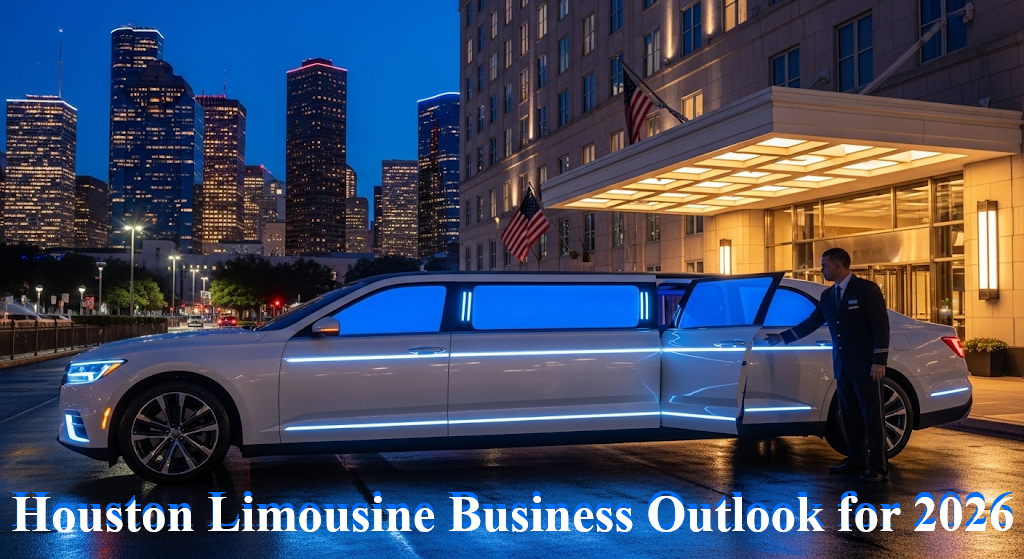
The Houston Limousine Business Outlook for 2026

0
Houston limousine industry trends for 2026, including travel forecasts, growth drivers, and strategies

Houston Limousine Business Outlook 2026: Trends, Data & Strategies

Article Highlights

  • Houston Limousine Business Outlook 2026 stays positive with strong growth opportunities.
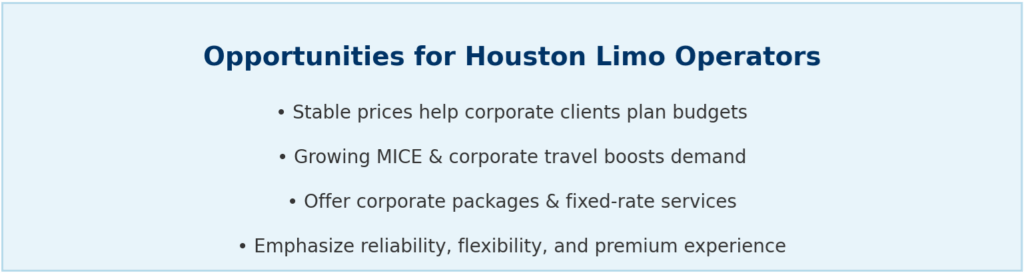
  • Stable travel prices create corporate contract opportunities for limo operators.
  • Houston’s diverse demand drivers: energy, medical tourism, conventions, cruises.
  • GBTA forecasts global business travel spend to reach $1.62 trillion in 2026.
  • Strategic tips for targeting corporate clients and high‑value events.
  • Opportunities in sustainability, tech integration, and premium services.

Introduction

Houston Limousine Business Outlook 2026 shows that as the city steps into the new year, its limousine industry stands at a unique intersection of economic resilience and travel recovery. The rebound in global business travel, combined with Houston’s position as an energy capital, healthcare hub, and international gateway, presents strong opportunities for growth.

Recent forecasts from the Global Business Travel Association (GBTA) and CWT indicate that prices for major travel segments—airfare, hotels, and ground transportation—are stabilizing after years of volatility. This trend benefits limousine operators by enabling predictable pricing models and long‑term corporate partnerships; as a result, the Houston Limousine Business Outlook 2026 remains positive.

houston-limousine-business-outlook-2026


GBTA price outlook supports a stable Houston Limousine Business Outlook 2026.

Global Business Travel Trends Shaping the Houston Limousine Business Outlook 2026

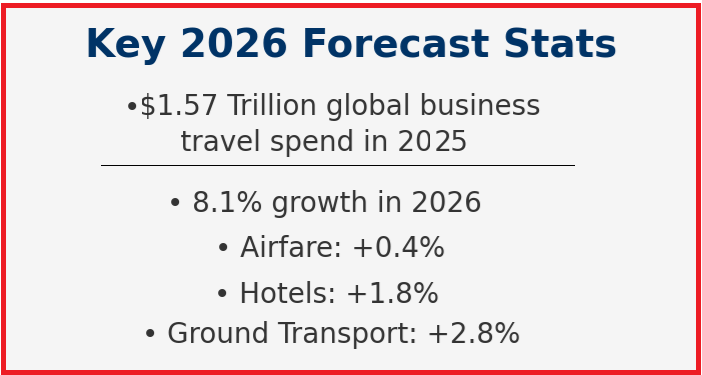
According to GBTA, global business travel spend is projected to hit $1.57 trillion in 2025 and $1.62 trillion in 2026—an 8.1% year‑over‑year increase. The U.S. is expected to contribute more than $329 billion in 2026, with Houston benefiting directly through increased traffic at George Bush Intercontinental (IAH) and William P. Hobby (HOU).

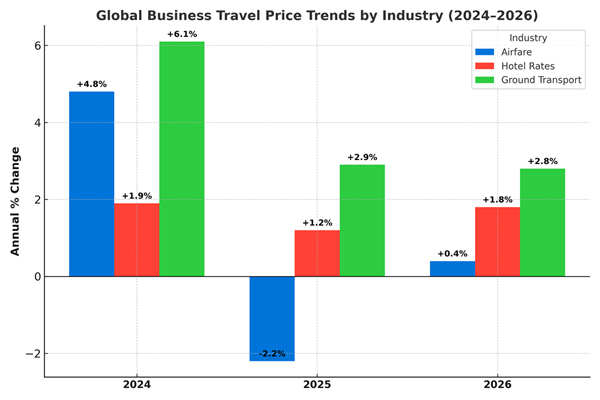
  • Airfares: +4.8% (2024), −2.2% (2025), +0.4% (2026)
  • Hotels: +1.9% (2024), +1.2% (2025), +1.8% (2026)
  • Ground Transport: +6.1% (2024), +2.9% (2025), +2.8% (2026)

Collectively, these figures reinforce why the Houston Limousine Business Outlook 2026 offers a stable foundation for targeted growth and smarter pricing.

Houston-Limousine-Business-Growth-statistics-2026

External resource: GBTA.org

Houston’s Competitive Advantage in Luxury Ground Transportation

  • Energy Sector Travel: 4,600+ energy‑related firms generate executive shuttle demand.
  • Convention & Event Hosting: The George R. Brown Convention Center holds 400+ events annually.
  • Cruise Access: Galveston cruise transfers create premium group opportunities.
  • Medical Tourism: The Texas Medical Center draws 10M+ annual visitors.

Consumer & Corporate Buyer Expectations in 2026

  • Reliability and punctuality
  • Transparent fixed‑rate pricing
  • Mobile booking and real‑time tracking
  • Sustainable fleet options (hybrids/EVs)
  • Premium onboard amenities (Wi‑Fi, refreshments)

“Pro Tips for Houston Limo Operators”

  • Use local SEO targeting “Houston corporate limo service” to attract B2B clients.
  • Partner with hotels, event planners, and cruise agencies and cruise transportation companies for recurring bookings.
  • Add hybrid and electric vehicles to appeal to eco‑conscious clients.
  • Offer bundled packages for airport transfers and major events.

Houston-Limousine-Business-Opportunity-2026

Strategic Opportunities in the Houston Limousine Business Outlook 2026

Market Trend Action Step Example
Price stability Offer annual corporate contracts Fixed‑rate airport transfers
MICE rebound Launch group transfer packages Convention center shuttles
Tech demand Integrate booking platforms Corporate travel app integration
Sustainability Add EVs/hybrids Eco‑friendly VIP transport
Cruise growth Partner with travel agencies All‑inclusive cruise transfers

Strategic Moves for Growth in 2026

To succeed within the Houston Limousine Business Outlook 2026, operators must go beyond excellent service and adopt data‑driven business strategies. Leverage airport arrival data, convention schedules, and cruise calendars to predict peak demand periods and optimize fleet deployment.

Furthermore, expand corporate account offerings, build strategic partnerships, invest in fleet diversity, and strengthen digital presence to capture the full potential of the Houston Limousine Business Outlook 2026.

  1. Leverage Data for Targeted Marketing – Use airport arrival data, convention calendars, and cruise schedules to predict high-demand dates and pre-position fleet availability.
  2. Expand Corporate Account Offerings – Introduce volume-based discounts, priority booking, and dedicated account managers for top clients.
  3. Build Strategic Partnerships – Form alliances with 5-star hotels, convention venues, and luxury travel agents to secure recurring business.
  4. Invest in Fleet Diversity – Offer a mix of sedans, SUVs, sprinter vans, and minibuses to cater to different group sizes and budgets.
  5. Strengthen Digital Presence – Rank for local SEO terms, maintain an active Google Business Profile, and publish monthly industry updates.

Risks and Challenges

  • Economic slowdowns can reduce discretionary travel, although corporate necessity travel often remains stable.
  • Competition from rideshare requires clear differentiation on quality and reliability.
  • Fuel and maintenance costs should be managed via efficient routing and preventive service.
  • Driver recruitment and retention demand ongoing training and incentives.

Conclusion

The Houston Limousine Business Outlook 2026 presents a promising landscape for growth. By embracing sustainability, building strategic partnerships, and strengthening digital presence, operators can position themselves to lead in Houston’s luxury ground transportation market.

Suggested links: About HLAMembershipGBTAGRB Convention CenterIAHHOU

Houston Limousine Business Outlook 2026


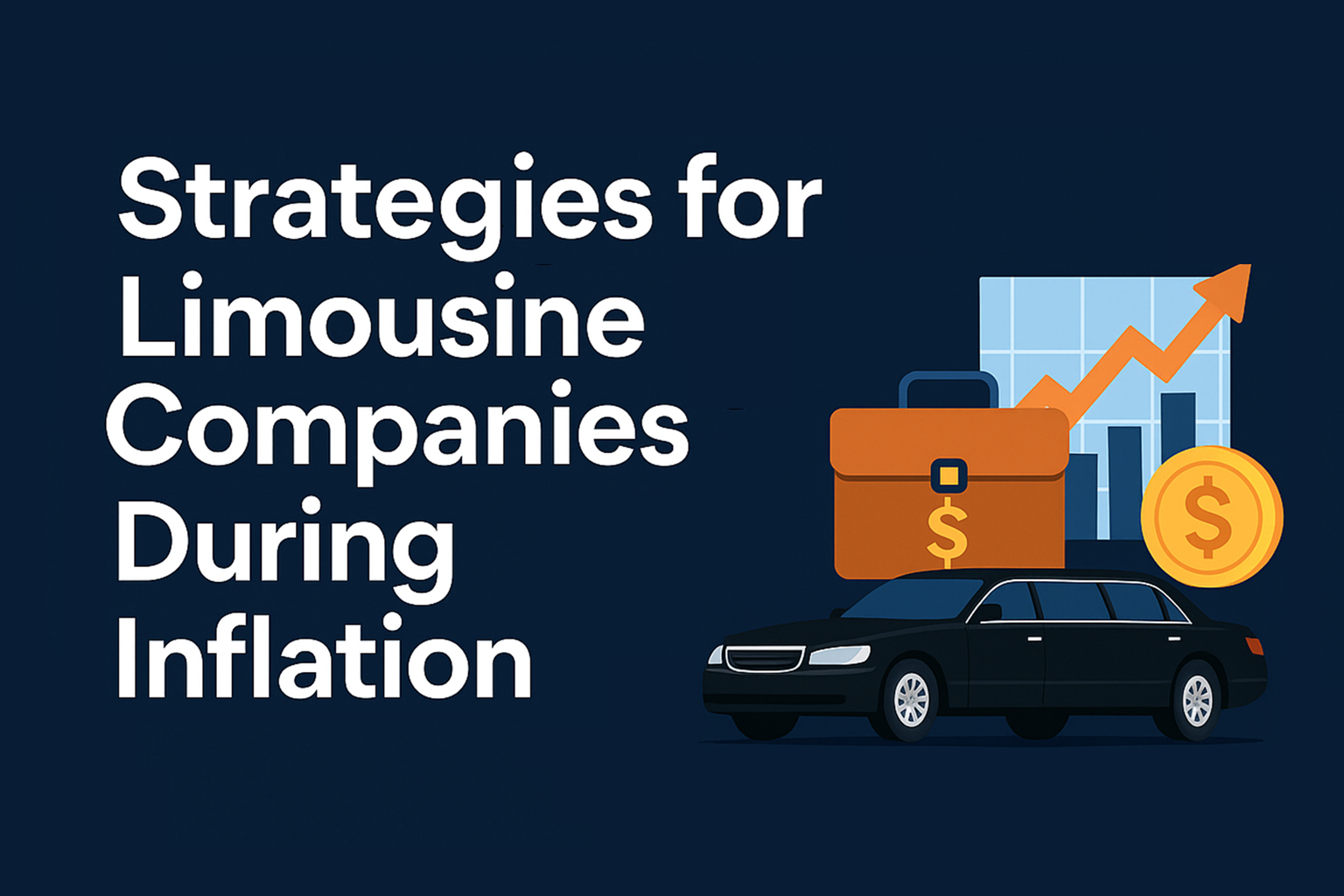
Thriving in an Inflationary Economy

0
Smart Strategies for Limousine Business Owners in 2025

Thriving in an Inflationary Economy

Smart Strategies for Limousine Business Owners in 2025

Good Read

Navigating Inflation in the Limousine Industry

Inflation has tested nearly every industry in recent years — and limousine businesses are no exception. From rising fuel costs and vehicle maintenance to driver shortages and insurance premiums, operators are facing increased expenses while customers demand affordability.

The challenge: how do you protect your bottom line without alienating clients?

This article presents smart, actionable strategies for limousine companies during inflation to remain competitive, efficient, and profitable — not just today, but long into the future.

Adjusting Your Pricing Without Losing Clients

When costs rise, the first instinct may be to raise prices. But for transportation companies, especially those serving corporate or cruise clients, aggressive rate increases can drive clients elsewhere.

Smarter Pricing Models for Limo Services

Instead of across-the-board price hikes, try:

– Tiered packages: Offer basic airport transfers with optional add-ons like meet-and-greet or premium water service.

– Bundled pricing: Combine common services — like round-trip cruise port transfers — at a slightly reduced rate.

– Dynamic pricing: For peak dates or last-minute bookings, implement surge pricing models similar to ride-share platforms.

Pro Tip: Explain pricing changes transparently on invoices or your website. Clients are more likely to accept increases when they understand they’re driven by fuel surcharges or labor shortages — not profit padding.

Reduce Expenses Without Cutting Service Quality

Reducing costs doesn’t mean reducing your standards. In fact, cutting waste rather than corners is key to sustaining customer satisfaction.

Audit Recurring Costs

Take time each quarter to review:

– Fleet insurance policies: Are there bundled or commercial fleet discounts available?

– Software subscriptions: Are you paying for unused features?

– Payment processors: Are processing fees eating into your margins?

According to Intuit, small businesses can save up to 10% annually just by eliminating overlapping tools and renegotiating contracts.

Optimize Vendor Relationships

Fuel, detailing, and parts vendors are major cost centers. Strategies include:

– Group buying: Team up with other local limo companies for bulk purchasing deals.

– Negotiate maintenance bundles: Some auto shops offer discounted plans for regular service.

Pro Tip: Partner with nearby businesses (like hotels or travel agencies) to share resources or offer joint promotions.

Diversify Revenue Streams to Stay Resilient

One of the most effective strategies for limousine companies during inflation is diversifying services without significant new overhead.

Offer Related Premium Services

Some ideas include:

– Hourly charters for local tours or nightlife

– Event logistics management for corporate clients

– Luggage delivery or airport meet-and-greet services

These can be easily added with your existing team and vehicles.

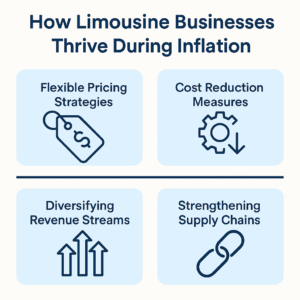
Graphic-on-How-Limousine-Thrive-During-Inflation.

Use Underutilized Assets Creatively

Do you have office space or vehicles sitting idle during slow hours?

– Convert garage space to a car detailing side business

– Rent out chauffeurs for non-limo corporate driving needs

– Offer parking rental or fleet storage to nearby operators

Build a More Flexible, Reliable Supply Chain

Recent supply chain issues exposed the risks of relying on one supplier — especially for parts, tires, or even black car interior supplies.

Establish Backup Vendors

Make it a rule to always have at least two suppliers for:

– Oil & filters

– Tires

– Uniforms

– Vehicle cleaning supplies

This protects your business from price shocks or backorders.

Stat: 71% of U.S. businesses reported at least one supply chain disruption in the past 12 months (Source: McKinsey, 2024).

Buy Strategically

Stocking up on critical supplies in advance can:

– Reduce per-unit costs

– Prevent service delays

– Protect against inflationary price jumps

Use inventory software or spreadsheets to track usage and forecast needs accurately.

Leverage Smart Financing — Before It’s Urgent

Access to capital can help you avoid short-term stress and invest in long-term success. But waiting until you’re cash-strapped limits your options.

Use Financing Proactively

Consider using:

– Business credit lines for purchasing fuel or insurance in bulk

– SBA loans for expanding your fleet or upgrading your dispatch software

– Leasing for new luxury vehicles without tying up cash

Pro Tip: Establish relationships with local banks or credit unions that understand seasonal cash flow in the transportation industry.

Plan Before You Borrow

Borrowing in a panic leads to unfavorable terms. Apply when:

– Revenue is steady

– You have time to compare options

– You’re making a growth investment, not just filling a gap

Invest in Technology That Saves Time and Money

Tech is no longer just a luxury for large companies. Even small limousine businesses can adopt affordable tools that reduce admin, improve scheduling, and boost customer experience.

Recommended Tools for Limo Operators

– Booking automation (Limo Anywhere, Book Rides Online)

– Driver GPS tracking (Geotab, Samsara)

– Online payment & invoice platforms (Square, Stripe, QuickBooks)

– Digital review request automation (Podium, NiceJob)

According to Deloitte, automation saves small businesses an average of 30 hours per month — time better spent on growth strategies.

Pro Tip: Choose tools that integrate with your website and accounting software to reduce double work.

Stay Agile in a Changing Economy

Economic shifts — whether from inflation, taxes, or regulations — aren’t slowing down. The most successful limo companies are those that remain flexible and proactive.

Stay Informed

Tap into:

– Your local chamber of commerce or your Houston Limousine Association

– Industry webinars and newsletters (NLA, LCT Magazine)

Small Business Development Centers (SBDCs) for financial strategy workshops

Build Contingency into Every Plan

– Always have a Plan B for staffing shortages or vehicle breakdowns

– Add flexibility clauses in affiliate contracts and event agreements

– Revisit your budget every quarter, not once a year

Conclusion: Adaptation Is the New Advantage

Inflation may be outside your control — but your response isn’t. The limousine businesses that succeed in 2025 and beyond will be those that think differently, plan proactively, and invest in service excellence and operational resilience.

Whether you’re rethinking pricing, trimming waste, or testing new services, remember: you’re not just surviving inflation — you’re building a smarter, more adaptable business.

Facebook
Twitter
LinkedIn

The Houston Limousine Association is Amazing

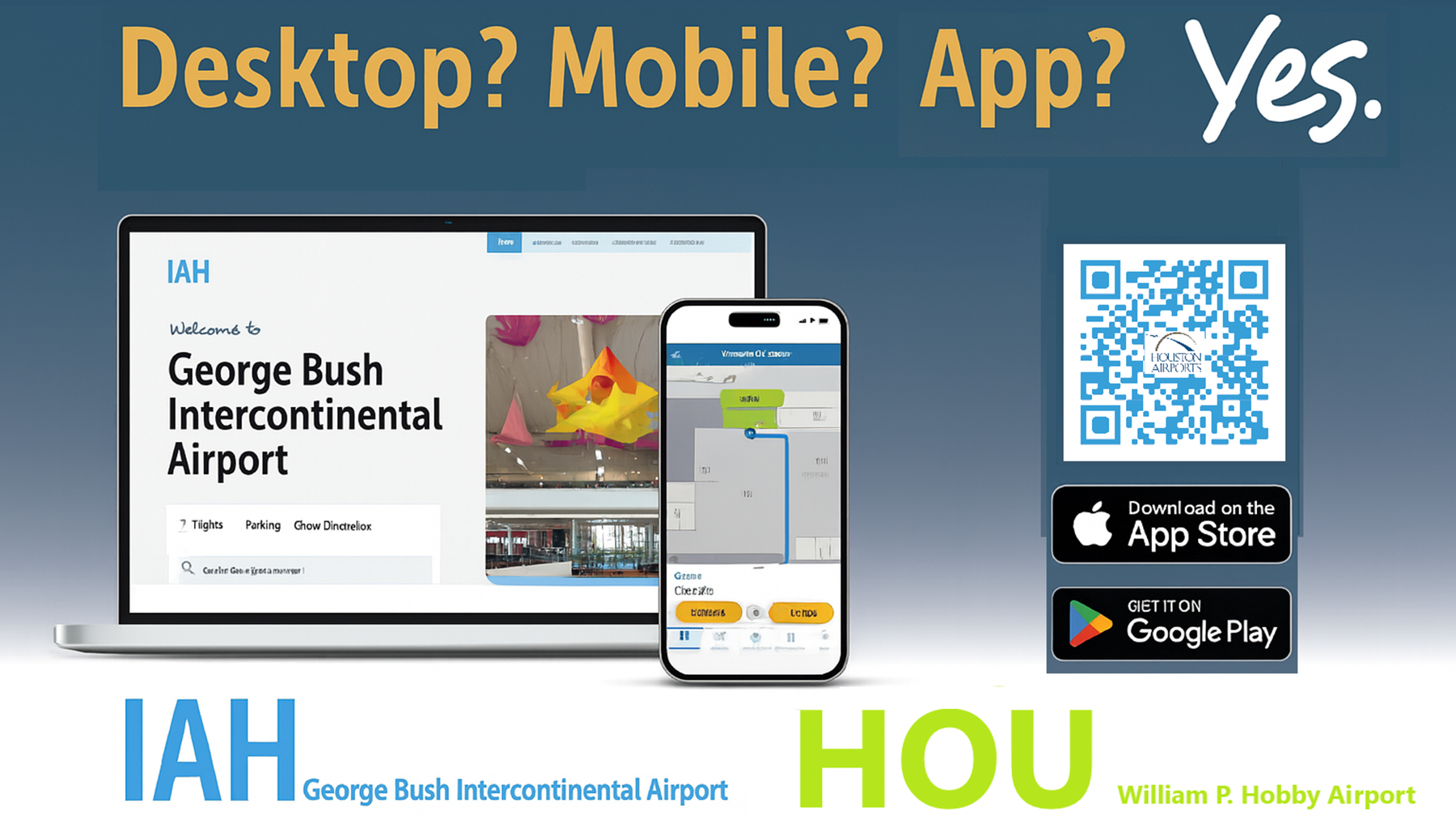
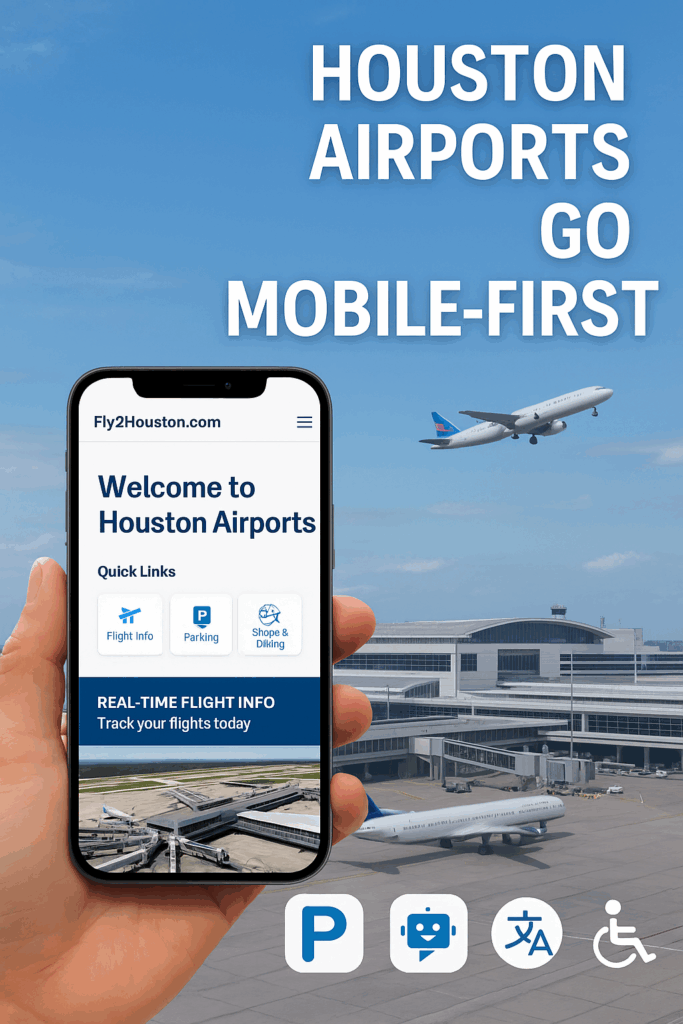
Houston Airports Launch Mobile-First Website to Support Record Passenger Growth

0
Houston Airports mobile-first website

Houston Airports Launch Mobile-First Website to Support Record Passenger Growth


Houston Airports is stepping confidently into the digital age with the launch of a fully redesigned, mobile-first website—a move aimed at supporting its unprecedented passenger growth and streamlining the travel experience for millions.

In 2024, Houston Airports served a record-breaking 63.1 million passengers, cementing the city’s reputation as a major hub for domestic and international travel. As travel rebounds and exceeds pre-pandemic levels, airport authorities are prioritizing innovation, convenience, and accessibility. One of the most impactful developments so far? A completely reimagined Fly2Houston.com.

Why This Matters for Travelers—and Limousine Operators

For Houston limousine operators, chauffeurs, and transportation providers, staying ahead of airport tech trends is crucial. Whether you’re picking up corporate clients at George Bush Intercontinental (IAH) or dropping off cruise passengers flying out of William P. Hobby (HOU), the new website features and updates will impact how your clients navigate the airport—and how you provide service.

With more than 70% of website traffic now coming from mobile devices, the new Fly2Houston.com is built to deliver a seamless, responsive experience across smartphones and tablets. That’s good news for anyone coordinating rides, checking flight updates, or planning airport arrivals and departures.

Key Features of the New Fly2Houston.com

  • Mobile-First Experience: Optimized for faster loading, smoother navigation, and compatibility across all screen sizes.
  • Two-Click Parking Reservations: Clients can now reserve airport parking in just two clicks, improving convenience and reducing stress.
  • AI-Powered Chatbot: A voice- and text-activated chatbot provides 24/7 real-time assistance for travelers navigating the airport.
  • Enhanced Accessibility: Features support users with visual, auditory, or cognitive challenges through customizable interface settings.
  • Multilingual Support: Website content is available in over 40 languages to better serve international travelers.

Digital Innovation That Reflects Airport Growth

The Fly2Houston.com redesign is part of a larger initiative to match Houston’s growing status as a global transportation hub. The Houston Airports mobile app, which complements the website, has already been downloaded more than 121,000 times and serves as a digital companion for passengers on the go.

From real-time TSA wait times to live flight status and interactive terminal maps, the new site empowers travelers to plan ahead and reduce stress during their journey.

“As we modernize our airports, we’re also modernizing how passengers interact with us online. From reserving parking to exploring accessibility features and finding restaurants on a map, our new website is designed to offer a world-class experience long before a passenger walks through our doors.”
Jim Szczesniak, Director of Aviation, Houston Airports

Houston Airports launches mobile-first website

What This Means for Houston Limousine Operators

For members of the Houston Limousine Association, this website update offers practical benefits:

  • Real-time flight updates: Stay informed to better coordinate pickups and drop-offs.
  • Multilingual support: Better serve international clients and VIP travelers.
  • Accessibility tools: Accommodate passengers with different needs.
  • Enhanced service: Impress clients with smoother, tech-enabled experiences.

We also recommend operators explore the website’s vendor and transportation resources. As airports modernize, aligning with their tools helps your business deliver premium, connected service.

Serving Houston’s Gateway Airports

Fly2Houston.com provides real-time information for all three Houston airports:

As these airports expand and improve, limousine providers must evolve to match expectations. Staying up to date with Houston Airports’ tech ensures your service remains modern and competitive.

About Houston Airports

Houston Airports is the City of Houston’s Department of Aviation, overseeing IAH, HOU, and EFD. In 2024, the system supported over 207,000 jobs and contributed $40.6 billion to the regional economy. Serving as a major gateway to Latin America and the South-Central U.S., Houston Airports connects people, businesses, and cultures from around the globe.

Final Thoughts

At the Houston Limousine Association, we encourage all our members to take a moment to explore the new Fly2Houston.com. Whether you’re an owner, chauffeur, or dispatcher, familiarity with these new digital tools can elevate your client service and align your business with the future of airport transportation.

Stay informed. Stay connected. And continue driving excellence.


Limousine Industry Insurance Survey: A Great Opportunity for Limo Operators

0
Limousine Industry Insurance Survey

The limousine industry insurance survey is an essential initiative designed to address the pressing challenges surrounding commercial auto insurance for transportation professionals. The National Limousine Association (NLA), in collaboration with the University Transportation Research Center (UTRC) at the City University of New York, has launched this industry-wide study to gather insights from operators and chauffeurs nationwide. With insurance premiums on the rise, understanding and addressing these costs is crucial for sustaining businesses in the chauffeured transportation sector.

What Is the Limousine Industry Insurance Survey?

Insurance costs continue to be a major concern for limousine operators, affecting business profitability and long-term stability. The limousine industry insurance survey serves as a critical tool to collect firsthand experiences from professionals in the field. By gathering data on premium fluctuations, coverage challenges, and risk management strategies, industry leaders can work toward effective solutions that support operators and reduce financial burdens.

The Houston Limousine Association (HLA) urges all limousine operators and chauffeurs to participate in this limousine industry insurance survey to ensure their voices are heard. Your input will help shape industry-wide recommendations and contribute to discussions that could lead to policy reforms.

Why Operators Should Participate in the Limousine Industry Insurance Survey

Your feedback in the limousine industry insurance survey can significantly influence how industry leaders and policymakers approach insurance-related concerns. HLA President Younes Jonah Aitouazdi emphasizes the importance of participation:

“This survey provides a unique opportunity for professionals to share their firsthand experiences with insurance challenges. By participating, operators and chauffeurs help drive discussions that can lead to meaningful improvements in the industry.”

Houston’s limousine operators play a vital role in the national chauffeured transportation landscape, serving corporate clients, special events, and tourism markets. However, rising operational costs, including insurance premiums, pose significant obstacles. Participating in the limousine industry insurance survey allows professionals to contribute valuable insights that can shape future strategies for cost management and risk reduction.

Industry Leadership & Scholarship Recognition

Alongside the limousine industry insurance survey, the National Limousine Association has announced its 2025 Day on the Hill Scholarship winners. This prestigious program honors professionals who have demonstrated exceptional commitment to advocacy and industry leadership.

Recipients of the 2025 Day on the Hill Scholarship will travel to Washington, D.C., on April 28-29 to discuss key industry issues with policymakers. Their involvement in legislative conversations ensures that the concerns of limousine operators remain a priority for decision-makers.

This year’s scholarship recipients include:

  • Paulos Bekele – Executive Transportation
  • Nelson Burton Jr. – Burton Transport
  • Paula DeBiasi – Chicago CoachWorks
  • Donielle Fawcett-McKee – Personal Sedan Services
  • Alicia Hayes – American Classic Limousine
  • Chad Jones – Primetime Transportation
  • Hillary Louarti – Diamond Transportation
  • Guri Rajput – SRTC Limo

HLA President Younes Jonah Aitouazdi commends the winners, stating:

“The dedication of these professionals reflects the spirit of leadership within our industry. Their participation in advocacy efforts ensures that limousine operators continue to be represented at the national level.”

Act Now: Participate in the Limousine Industry Insurance Survey

The Houston Limousine Association remains committed to keeping operators informed about important industry developments. The limousine industry insurance survey presents an opportunity for professionals to contribute to the ongoing conversation about insurance challenges and solutions.

Make your voice count—participate in the limousine industry insurance survey today! Your insights can drive change, support policy discussions, and help create a more stable future for limousine businesses nationwide.

Transportation Business Education: The Ultimate Guide to Boosting Profitability in 2025

0

Transportation Business Education: The Ultimate Guide to Boosting Profitability in 2025

WhArticle Highlights:

• 15+ essential courses for transportation business growth

• 40% average profit increase after implementing education strategies

• Step-by-step implementation guide with ROI metrics

• Expert insights from industry leaders

• Free and premium resource recommendations

Transportation Business Education Matters Now More Than Ever

In today’s rapidly evolving transportation industry, success isn’t just about having a reliable fleet anymore. Furthermore, modern transportation business owners are discovering that strategic education has become the driving force behind sustainable growth and increased profitability. Recent studies show that transportation companies investing in education and training programs experience an average of 40% higher profits compared to their counterparts.

The State of Transportation Business Education in 2025

According to the National Transportation Association’s latest report, transportation companies that prioritize ongoing education and training consistently outperform their competitors. In fact, these businesses demonstrate:

– 218% higher revenue per employee

– 45% increase in customer retention

– 30% reduction in operational costs

– 65% improvement in safety metrics

Essential Educational Pathways for Transportation Business Success

PRO TIPS:

The 80/20 Revenue Rule

1- Focus on the top 20% of clients generating 80% of revenue

2- Create VIP programs for these clients

      3- Assign your best drivers to key accounts

      1. Business Management and Strategy

      Modern transportation business owners must develop a comprehensive understanding of business management principles. Consequently, successful entrepreneurs are enrolling in courses that cover:

      – Strategic Planning and Business Development

      – Financial Management and Analysis

      – Operations Optimization

      – Risk Management

      – Leadership Development

      Success Story: Elite Transportation Services

      After completing a comprehensive business management program, Elite Transportation Services increased their revenue by 75% within 12 months. Moreover, their operational efficiency improved by 40%.

      2. Technology and Digital Transformation

      In today’s digital age, technology education has become increasingly crucial for transportation business success. Therefore, business owners should focus on:

      – Transportation Management Systems (TMS)

      – Fleet Management Software

      – Digital Marketing Platforms

      – Customer Relationship Management (CRM)

      – Data Analytics and Reporting

      Case Study: Metropolitan Shuttle Services

      Following a digital transformation course, Metropolitan Shuttle Services:

      – Reduced dispatch time by 60%

      – Increased online bookings by 85%

      – Improved customer satisfaction ratings by 45%

      – Decreased fuel costs by 25%

      PRO TIPS

      Peak Hour Optimization

      1- Map your busy hours over 6 months

      2- Create surge pricing models3

      3- Develop partnerships for off-peak hours

      4- Cross-train staff for peak coverage

          3. Financial Management and Analysis

          Understanding financial principles is essential for sustainable growth. Subsequently, successful transportation business owner’s master:

          – Cost Analysis and Control

          – Pricing Strategy Development

          – Budgeting and Forecasting

          – Revenue Management

          – Investment Planning

          Professional Certifications That Drive Success

          Industry-Recognized Certifications

          1. Certified Transportation Professional (CTP)

             – Recognition: National private fleet certification program

             – Duration: 6-12 months

             – ROI: Average 35% salary increase

          2. Transportation & Logistics Management Certification

             – Focus: Supply chain and logistics optimization

             – Duration: 3-6 months

             – Impact: 25% improvement in operational efficiency

          3. Fleet Management Certification

             – Emphasis: Modern fleet operations and maintenance

             – Duration: 4-8 months

             – Results: 30% reduction in fleet-related costs

          PRO TIPS:

          Fleet Management Secrets
          1- Replace vehicles at 60% of their expected lifespan
          2- Negotiate bulk maintenance contracts
          3- Create a driver rotation system for even vehicle wear
          4- Implement a predictive maintenance schedule

          Implementation Strategy: Your 90-Day Roadmap to Success

          Month 1: Foundation Building

          – Week 1: Complete industry analysis and education needs assessment

          – Week 2: Select initial certification or course

          – Week 3: Begin implementation of learning management system

          – Week 4: Establish baseline metrics for measuring success

          Month 2: Skills Development

          – Week 1-2: Complete core competency training

          – Week 3: Implementation of new systems and processes

          – Week 4: Initial assessment and adjustments

          Month 3: Integration and Optimization

          – Week 1-2: Advanced training and certification completion

          – Week 3: Team training and knowledge sharing

          – Week 4: Results measurement and strategy refinement

          Pro Tips for Maximum Educational ROI

          1. Strategic Learning Implementation

          – Focus on one core competency at a time

          – Create a learning schedule that doesn’t disrupt operations

          – Implement new knowledge immediately after acquisition

          – Measure and track results consistently

          2. Team Development

          – Share knowledge across departments

          – Create mentorship programs

          – Implement regular training sessions

          – Reward educational achievements

          3. Technology Integration

          – Start with user-friendly systems

          – Ensure proper staff training

          – Monitor adoption rates

          – Regular system updates and maintenance

          PRO TIPS:

          Cash Flow Optimization
          1- Negotiate 45-day payment terms with vendors
          2- Offer early payment discounts to clients
          3- Create seasonal pricing strategies
          4- Maintain a 3-month emergency fund

          Investment and Returns: Understanding the Numbers

          Educational Investment Levels

          1. Essential Investment ($1,000-5,000)

             – Basic certifications

             – Online courses

             – Industry workshops

             – Software training

          2. Advanced Investment ($5,000-15,000)

             – Comprehensive certification programs

             – Advanced management training

             – Technology implementation

             – Consulting services

          3. Premium Investment ($15,000+)

             – Executive education programs

             – Custom corporate training

             – Complete digital transformation

             – Advanced certification packages

          Measuring Success: Key Performance Indicators

          Operational Metrics

          – Fleet utilization improvement

          – Fuel efficiency gains

          – Maintenance cost reduction

          – Service delivery time

          Financial Metrics

          – Revenue growth

          – Profit margin increase

          – Cost per mile reduction

          – Return on investment

          Customer Service Metrics

          – Satisfaction ratings

          – Retention rates

          – Referral increases

          – Complaint reduction

          Future Trends in Transportation Business Education

          Looking ahead, several emerging trends will shape transportation business education:

          1. Virtual Reality Training

             – Immersive driver training

             – Safety scenario simulation

             – Equipment maintenance practice

          2. Artificial Intelligence Integration

             – Predictive analytics

             – Route optimization

             – Customer service automation

          3. Sustainability Focus

             – Green fleet management

             – Environmental compliance

             – Sustainable business practices

          Conclusion: Taking Action for Success

          The transportation industry continues to evolve rapidly, and education remains the key differentiator between thriving and struggling businesses. Therefore, investing in the right educational programs and implementing learned strategies effectively will determine your company’s success in 2025 and beyond.

          Next Steps for Implementation

          1. Assess your current educational needs

          2. Choose appropriate certification programs

          3. Develop an implementation timeline

          4. Monitor and measure results

          5. Adjust strategies as needed

          Remember, successful transportation business owners never stop learning. Start your educational journey today and position your company for sustainable growth and increased profitability.