

Table of Contents
ToggleThriving in an Inflationary Economy
Smart Strategies for Limousine Business Owners in 2025
Navigating Inflation in the Limousine Industry
Inflation has tested nearly every industry in recent years — and limousine businesses are no exception. From rising fuel costs and vehicle maintenance to driver shortages and insurance premiums, operators are facing increased expenses while customers demand affordability.
The challenge: how do you protect your bottom line without alienating clients?
This article presents smart, actionable strategies for limousine companies during inflation to remain competitive, efficient, and profitable — not just today, but long into the future.
Adjusting Your Pricing Without Losing Clients
When costs rise, the first instinct may be to raise prices. But for transportation companies, especially those serving corporate or cruise clients, aggressive rate increases can drive clients elsewhere.
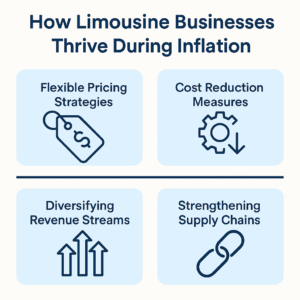
Smarter Pricing Models for Limo Services
Instead of across-the-board price hikes, try:
– Tiered packages: Offer basic airport transfers with optional add-ons like meet-and-greet or premium water service.
– Bundled pricing: Combine common services — like round-trip cruise port transfers — at a slightly reduced rate.
– Dynamic pricing: For peak dates or last-minute bookings, implement surge pricing models similar to ride-share platforms.
Pro Tip: Explain pricing changes transparently on invoices or your website. Clients are more likely to accept increases when they understand they’re driven by fuel surcharges or labor shortages — not profit padding.
Reduce Expenses Without Cutting Service Quality
Reducing costs doesn’t mean reducing your standards. In fact, cutting waste rather than corners is key to sustaining customer satisfaction.
Audit Recurring Costs
Take time each quarter to review:
– Fleet insurance policies: Are there bundled or commercial fleet discounts available?
– Software subscriptions: Are you paying for unused features?
– Payment processors: Are processing fees eating into your margins?
According to Intuit, small businesses can save up to 10% annually just by eliminating overlapping tools and renegotiating contracts.
Optimize Vendor Relationships
Fuel, detailing, and parts vendors are major cost centers. Strategies include:
– Group buying: Team up with other local limo companies for bulk purchasing deals.
– Negotiate maintenance bundles: Some auto shops offer discounted plans for regular service.
Pro Tip: Partner with nearby businesses (like hotels or travel agencies) to share resources or offer joint promotions.
Diversify Revenue Streams to Stay Resilient
One of the most effective strategies for limousine companies during inflation is diversifying services without significant new overhead.
Offer Related Premium Services
Some ideas include:
– Hourly charters for local tours or nightlife
– Event logistics management for corporate clients
– Luggage delivery or airport meet-and-greet services
These can be easily added with your existing team and vehicles.
Use Underutilized Assets Creatively
Do you have office space or vehicles sitting idle during slow hours?
– Convert garage space to a car detailing side business
– Rent out chauffeurs for non-limo corporate driving needs
– Offer parking rental or fleet storage to nearby operators
Build a More Flexible, Reliable Supply Chain
Recent supply chain issues exposed the risks of relying on one supplier — especially for parts, tires, or even black car interior supplies.
Establish Backup Vendors
Make it a rule to always have at least two suppliers for:
– Oil & filters
– Tires
– Uniforms
– Vehicle cleaning supplies
This protects your business from price shocks or backorders.
Stat: 71% of U.S. businesses reported at least one supply chain disruption in the past 12 months (Source: McKinsey, 2024).
Buy Strategically
Stocking up on critical supplies in advance can:
– Reduce per-unit costs
– Prevent service delays
– Protect against inflationary price jumps
Use inventory software or spreadsheets to track usage and forecast needs accurately.
Leverage Smart Financing — Before It’s Urgent
Access to capital can help you avoid short-term stress and invest in long-term success. But waiting until you’re cash-strapped limits your options.
Use Financing Proactively
Consider using:
– Business credit lines for purchasing fuel or insurance in bulk
– SBA loans for expanding your fleet or upgrading your dispatch software
– Leasing for new luxury vehicles without tying up cash
Pro Tip: Establish relationships with local banks or credit unions that understand seasonal cash flow in the transportation industry.
Plan Before You Borrow
Borrowing in a panic leads to unfavorable terms. Apply when:
– Revenue is steady
– You have time to compare options
– You’re making a growth investment, not just filling a gap
Invest in Technology That Saves Time and Money
Tech is no longer just a luxury for large companies. Even small limousine businesses can adopt affordable tools that reduce admin, improve scheduling, and boost customer experience.
Recommended Tools for Limo Operators
– Booking automation (Limo Anywhere, Book Rides Online)
– Driver GPS tracking (Geotab, Samsara)
– Online payment & invoice platforms (Square, Stripe, QuickBooks)
– Digital review request automation (Podium, NiceJob)
According to Deloitte, automation saves small businesses an average of 30 hours per month — time better spent on growth strategies.
Pro Tip: Choose tools that integrate with your website and accounting software to reduce double work.
Stay Agile in a Changing Economy
Economic shifts — whether from inflation, taxes, or regulations — aren’t slowing down. The most successful limo companies are those that remain flexible and proactive.
Stay Informed
Tap into:
– Your local chamber of commerce or your Houston Limousine Association
– Industry webinars and newsletters (NLA, LCT Magazine)
– Small Business Development Centers (SBDCs) for financial strategy workshops
Build Contingency into Every Plan
– Always have a Plan B for staffing shortages or vehicle breakdowns
– Add flexibility clauses in affiliate contracts and event agreements
– Revisit your budget every quarter, not once a year
Conclusion: Adaptation Is the New Advantage
Inflation may be outside your control — but your response isn’t. The limousine businesses that succeed in 2025 and beyond will be those that think differently, plan proactively, and invest in service excellence and operational resilience.
Whether you’re rethinking pricing, trimming waste, or testing new services, remember: you’re not just surviving inflation — you’re building a smarter, more adaptable business.